m-bootloader
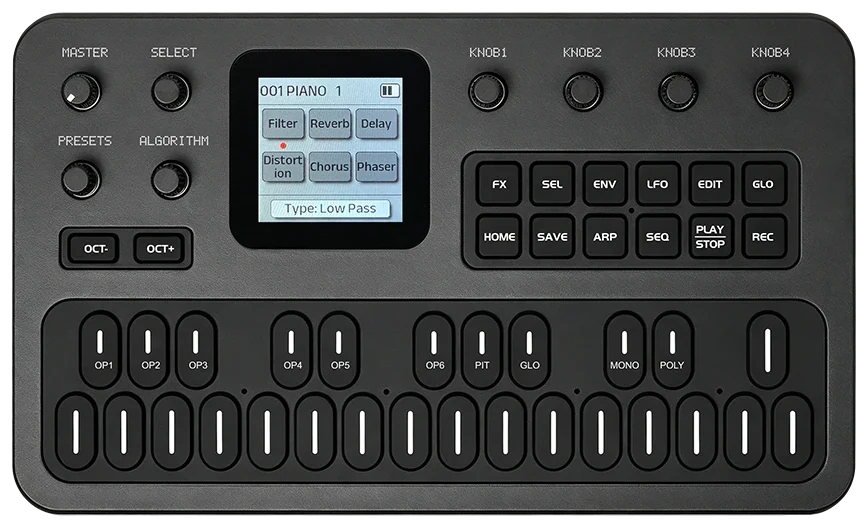
MIT-licensed replacement bootloader for the FM-1 and SMK-37 Pro/Elite with a power-on key into USB download mode, a recovery menu, and the flash loader that M-Flasher uses. Formerly published as fm1-bootloader.
Brick risk. Flashing this carries a known, documented risk of damaging the device.
- Distribution
- Prebuilt image you flash yourself
- Source
- github.com https://github.com/jvitkauskas/m-bootloader
Quality
Established
Mature and widely used.
- MaturityModerate
0.1 years · 8 releases · 201 commits
- PopularityModerate
★ 65 · 5 forks (2 active)
- VitalityStrong
201 commits last year · last activity 2026-11-23
- Issue healthStrong
2 closed / 0 open · 36 of 37 PRs merged
- InfluenceLow
0 catalog entries build on this
- CommunityModerate
2 contributors · bus factor 1
Data from GitHub, 2026-11-23. How ratings work.
- loader
- flasher
- utility
Description
Replaces the bootloader M-VAVE ships. A key held at power-on resets the chip into its ROM USB download mode, so a damaged flash can be rewritten over a normal cable, and a second key opens a recovery menu that shows the firmware's state, boots a firmware that fails its checksum once, or enters download mode (2.3 and earlier also had a wipe-user-data item, removed in 2.4). Since 2.1 the menu also has a MIDI mode, in which a browser installer sent over USB MIDI can reinstall firmware on a unit with none running, and the bootloader can load a second stage from an SD card. Since 2.3 the menu opens in MIDI mode by itself when no firmware starts. Since 2.2 MIDI mode can also read and back up the whole flash and run small programs in RAM, and a RAM helper offers the same on a unit that does not have the bootloader. Every firmware file's checksum is checked before it starts, the SMK-37 build keeps a copy of the factory calibration, and M-VAVE's stock firmware, Snoop37, SLOOP and Baud Girl run with it. It also carries the flash loader M-Flasher runs on the chip. The author wrote it from a specification, without code from JieLi's SDK or from the earlier fm1-bootloader, which is no longer online. Official M-VAVE updates and Baud Girl's installer put the stock bootloader back, so it has to be installed again afterwards.
Install notes
Back up the unit with M-Flasher first. Install the .boot file for your board with M-Flasher, or use the .fwsc packages in the release, which M-UPGRADE installs over USB MIDI without download mode and which hold no firmware (M-UPGRADE then ends with a timeout error that the README says is expected). The README reports tests on hardware for the FM-1 and the SMK-37 Pro and, with the same build, the Elite. A broken bootloader write is not repaired by the bootloader itself; the USB_KEY dongle still forces download mode. The 2.1 to 2.3 releases recommend M-Flasher 0.9.1 or newer, and 2.3 says it is little tested on the newer UC25HQ80 flash chip. Since 1.3, building needs Linux x86-64 and the author's open pi32v2 LLVM toolchain, and since 3.0 the author's pi32v2 Rust compiler too, because the C sources are replaced by Rust; nothing from JieLi is needed.
Version history
| Version | Date | Notes |
|---|---|---|
| 3.0 | 2026-11-22 | Rewrites the bootloader in Rust with the same menu, MIDI mode, SD card item and file formats as 2.4, so nothing visible changes but every byte does. The flash loader becomes 1.4, though M-Flasher still uses its own 1.3. Tested on an FM-1 by programs and on the same code under 2.4 version strings on an FM-1 and an SMK-37 Pro; this exact build was not tested on an SMK-37 or by hand. Use M-Flasher 0.9.1 or newer. |
| 2.4 | 2026-11-13 | Removes the recovery menu's Wipe user data item, since firmwares keep settings in places they do not declare; to reset a firmware use its own reset or restore a backup with M-Flasher. Built with a newer pi32v2 LLVM, so every file differs from 2.3. Tested on an FM-1 and an SMK-37 Pro; the release says it has not been run on the FM-1's newer UC25HQ80 chip. Use M-Flasher 0.9.1 or newer. |
| 2.3 | 2026-11-08 | When the firmware is missing, damaged or returns to the bootloader, the menu now opens in MIDI mode by itself and says why, so a computer can reinstall the unit with nobody at it. The SMK-37 gets the SD CARD item, and the M-UPGRADE packages carry a self-unpacking installer, leaving the bootloader room to grow. Adds a display_pixels() call for RAM apps. Tested on an SMK-37 Pro, and on an FM-1 by another user at the same bootloader code; the release says it is not tested on the UC25HQ80 chip. Use M-Flasher 0.9.1 or newer. |
| 2.2 | 2026-11-06 | MIDI mode can now read raw flash and back up the whole 1 MiB over USB MIDI (about 16 seconds), and load and run a small program in RAM. Adds a RAM helper package with the same abilities that runs on a unit without m-bootloader and returns to its firmware afterwards; the release says it does not start on every firmware. The SMK-37 can restore presets up to 0xFF000 while its pairing and calibration area stays unwritten. Use M-Flasher 0.9.1 or newer. |
| 2.1 | 2026-11-05 | Adds MIDI mode (hold PLAY on the FM-1 or SEQ PLAY on the SMK-37 at power-on) for reinstalling firmware from a browser installer, including from a phone, and loading a second stage from an SD card. Packs most of the bootloader, cuts the boot configuration to 96 bytes so 1.2 and 1.3 no longer end in BAD CONFIG when installed over it, and keeps the hold-REC path to download mode in a small uncompressed stage. |
| 1.3 | 2026-11-04 | Fixes BAD CONFIG on every start on FM-1s with M-VAVE's 016 boot area, and is the first build made with the author's open pi32v2 LLVM toolchain, with flash loader 1.3. The release says it is untested on the FM-1's newer UC25HQ80 flash chip, where one unit did not start after 1.2. |
| 1.2 | 2026-10-19 | Adds .fwsc packages that M-UPGRADE installs; the bootloaders change only in their version text. |
| 1.1 | 2026-10-17 | Makes the FM-1's REC and PLAY power-on keys work. |