foma
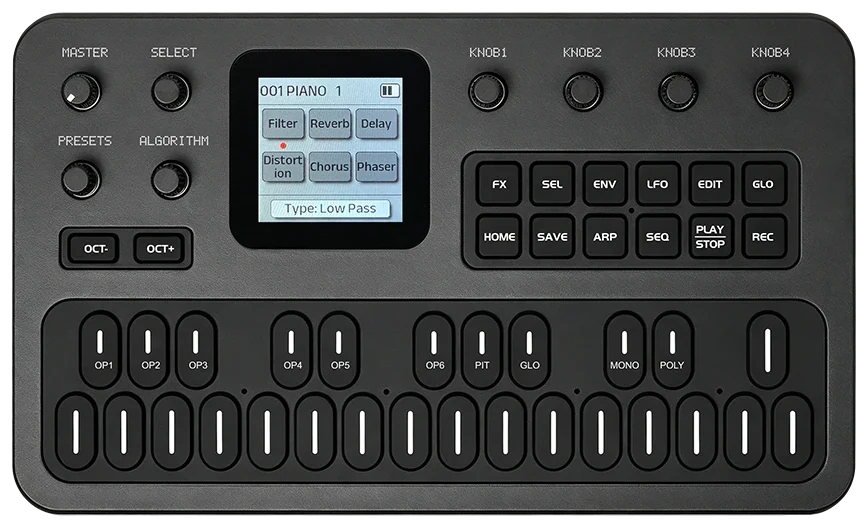
Docker-based framework for writing FM-1 firmware in a single C file, with a browser emulator that rebuilds on save, a USB installer and a rescue page, on Felucca's platform or M-VAVE's SDK.
- Distribution
- Build from source yourself
- License notes
- The platform/mvave directory is from M-VAVE's FM-1 Open kit: GPLv3 with M-VAVE's SDK linking exception, plus the binary engine library under M-VAVE's terms for FM-1 devices only (platform/mvave/LICENSE.md and THIRD_PARTY.md). The Felucca parts and the USB audio code ported from felucca-bsp are credited in LICENSING.md.
- Source
- github.com https://github.com/konsumer/foma
- Homepage
- konsumer.js.org https://konsumer.js.org/foma/
Quality
Foundational
Other projects build on it, or it is the maker's own open firmware or SDK.
- MaturityLow
0.1 years · 0 releases · 29 commits
- PopularityLow
★ 10 · 3 forks (1 active)
- VitalityStrong
29 commits last year · last activity 2026-11-10
- Issue healthModerate
0 closed / 0 open · 9 of 10 PRs merged
- InfluenceStrong
5 catalog entries build on this
Derived entries: BARLINE, BE HERE NOW, GlitchDrums FM1, GLORY PAD, Melodrum. - CommunityLow
1 contributor · bus factor 1
Data from GitHub, 2026-11-23. How ratings work.
- sdk
- emulator
- platform
- flasher
- usb-midi
Description
An Arduino-style API of setup, loop and audio functions covers keys, buttons, encoders, LEDs, the screen, USB and TRS MIDI, MIDI clock, settings and sound helpers. `./fm1 dev` builds in the toolchain container, serves a page with the emulator, the installer and the rescue tools, and the build rejects code the chip cannot run, such as floating point or 64-bit division. The default platform is Felucca's via SLOOP and Dinghy, with an optional Bluetooth MIDI link in and out that can also connect to a Bluetooth MIDI controller or another FM-1 (the stack comes from Optimist). An optional platform runs on M-VAVE's FM-1 SDK to add Bluetooth audio and USB audio both ways at the cost of most of the flash space. A bigscreen folder holds a one-file C header, with its protocol, that sends the FM-1's screen to a computer, a phone or fm1buddy over USB MIDI. FOMAJAM is built with it. The repository doubles as a template: `./fm1 new` renames it for a new firmware.
Install notes
Needs Docker; run ./fm1 dev (fm1.cmd dev on Windows) and open http://localhost:8000. The page installs the build, or any .fwsc, over USB from Chrome or Edge, and its Rescue tab goes back to M-VAVE's V15, checked by hash. `./fm1 flash` installs a build from the command line on the computer (not in Docker).
Version history
| Version | Date | Notes |
|---|---|---|
| main @ 885100f | 2026-11-10 | No tagged releases; this is the latest commit, which adds a Big Screen header for sending the FM-1's screen to a computer. Before that it accepts the newer B36014 flash chip in the platform, loader and recovery code, the Docker toolchain image includes the AC79 SDK, fetched from a mirror, and the README drops its note that the M-VAVE SDK platform was only tried in an emulator. |