FMDj
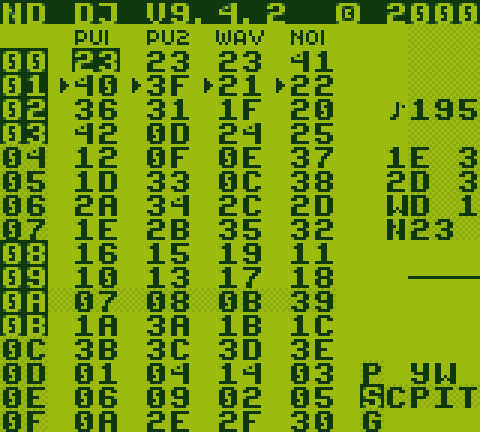
Runs the Game Boy programs LSDj and DMGo! on the FM-1 in a built-in Game Boy emulator, using its screen, keys, knobs and sound. You supply your own ROM; a browser page checks it and installs it over USB.
by DEADACTIVE
- Distribution
- Browser installer (WebMIDI / WebUSB)
- License notes
- Stated in LICENSE and LICENSING.md, as a fork of Felucca. Peanut-GB and minigb_apu are MIT, and the package holds three JieLi SDK files under Apache-2.0. LSDj and DMGo! are not included and keep their own terms; the author notes that LSDj's licence forbids copying or distributing it, so a firmware built with your ROM inside is for your own unit only.
- Source
- github.com https://github.com/DeadActive/FMDj
- Homepage
- deadactive.github.io https://deadactive.github.io/FMDj/
- emulator
- tracker
- drums
- chiptune
- game
- performance
Description
Peanut-GB (processor, memory, screen) and minigb_apu (the four sound channels) run inside a Felucca-based firmware. The screen is drawn at 1.5x, the knobs and keys stand in for the Game Boy's buttons, and the sound is timed within each frame so notes land on the beat. One program is on the unit at a time, LSDj (Johan Kotlinski's tracker) or DMGo! (Audiowanderer's drum machine), and installing the other replaces it. The FM-1's GLO key opens a menu over the lower half of the screen with screen colour themes, a status bar and emulator options, and holding REC saves to flash. The project site has a browser simulator that runs the firmware with your ROM, and a song page that moves LSDj songs and kits, or DMGo's save, in and out over USB. Neither program nor any Game Boy boot ROM is in the repository, the firmware or the site; the install page builds the firmware around the ROM you choose, in the browser. Link-port and MIDI clock sync and a third program, mGB, are listed as next steps.
Install notes
Open the install page in Chrome or Edge, choose your own LSDj or DMGo! .gb file, which the page runs in the emulator to check, connect the FM-1 by USB directly to the computer and press Install. Do not unplug it while it writes. The README says that an FM-1 that no longer starts after a failed install needs a Transporter to recover, and that installing is at your own risk. Building from source also gives a firmware without a ROM, plus a private one with your ROM in it that must not be shared.
Version history
| Version | Date | Notes |
|---|---|---|
| main @ 10f98c0 | 2026-10-22 | No tagged releases; this is the latest commit. |