FM-1 Manager for iPhone
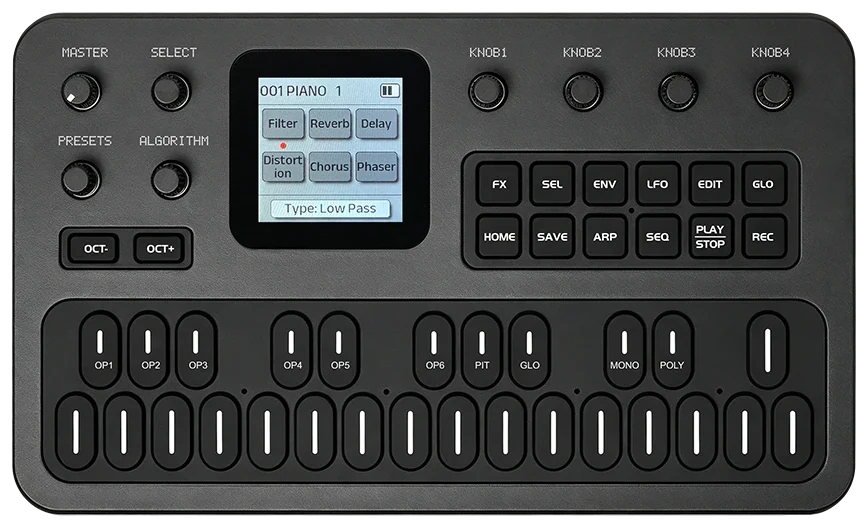
Unofficial iPhone app that supplies the Web MIDI the FM-1 Firmware Hub and fm1-dock installers need, over USB, and adds a local library of firmware and module files, module sets and a touch performance screen.
by KonradHerman
- Distribution
- Build from source yourself
- Requires stock
- A firmware with a compatible USB updater; tested on fm1-dock 0.9.0
- License notes
- Read from the README, which names GPL-3.0-only, and the LICENSE file. The bundled dock.js, fm1install.js, ports.js and fm1ota.js come from fm1-dock and Felucca under the same licence. An FM1_DOCK=NO build leaves them out.
- Source
- github.com https://github.com/KonradHerman/fm1-manager
- flasher
- librarian
- ios
- usb-midi
- web-midi
Description
Safari on iOS has no Web MIDI, so the app loads thefirmwarehub.com and the fm1-dock installer page inside its own browser view and provides Web MIDI to them through CoreMIDI over a USB cable. It also keeps .fwsc and .dock files in an app library, installs a library file with an offline page that uses fm1-dock's installer code, and has experimental Rigs (named sets of fm1-dock modules that are compared with what is on the unit and applied step by step, with resume after an interrupted cable) and Hands (an XY pad and touch keyboard that sends MIDI). The README says it is not made or endorsed by M-VAVE, the Hub or fm1-dock. The README states that most features have only been run against a simulated FM-1 in tests, and that the author has used one iPhone with one FM-1. It has not been tried on an iPad, an older flash chip or an SMK-37. The repository holds no firmware files. It includes unmodified fm1-dock and Hügelton Instruments installer scripts under the same GPL, and the README says whether these may go through the App Store is still being discussed with their authors.
Install notes
The README links a TestFlight beta that opens once Apple approves the first public build (submitted 27 November 2026); until then the app has to be built. Building needs a Mac with Xcode 26, XcodeGen and an Apple developer account (a free one runs it on your own phone), iOS 17 or later, with your own team ID and bundle identifier set in project.yml. It writes firmware or modules to the unit through the installers it loads, so the README warns that a cut cable or flat battery can leave the FM-1 in update mode. It lists fm1-dock's safety nets (OCT+ at power-on for a safe start, OCT- for the USB rescue) and M-Flasher on a computer as the way back to stock; the FM-1's mask-ROM boot mode cannot be overwritten.
Version history
| Version | Date | Notes |
|---|---|---|
| main @ 3dbbf30 | 2026-11-27 | No tagged releases; this is the latest commit, which adds the TestFlight link to the README. Since the previous row the commits add an Update mode screen that says what the unit is doing and what to do, a Baud Girl installer on the home screen, detection of the newer flash chip with a Hub filter for it, a known-problems list, builds 8 and 9, and a test workflow with issue templates. |
| main @ a49d12b | 2026-11-18 | No tagged releases; this is the latest commit. |