386 DX Engine
C library for singing text: given a line of English, a syllable number and MIDI notes, it sings that syllable at those pitches for an exact length. The voice inside 386DX KaraokeBot, built on eSpeak NG's Klatt synthesizer.
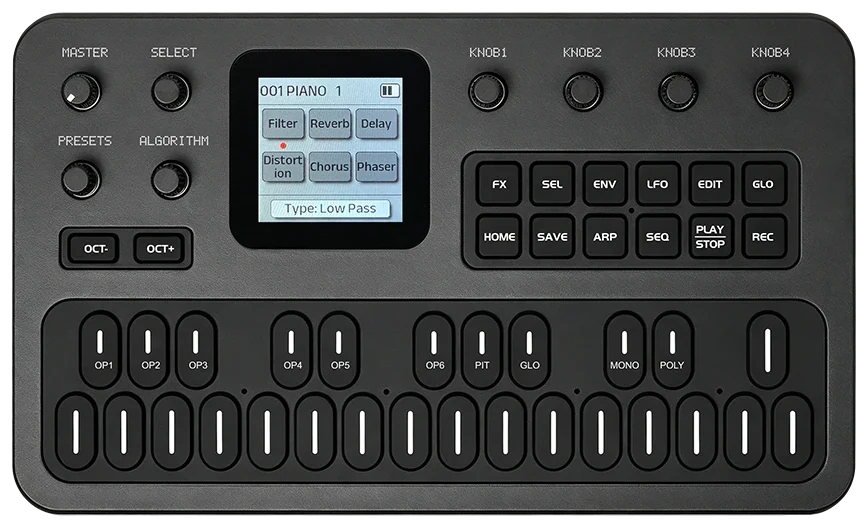
- Distribution
- Build from source yourself
- License notes
- Stated in LICENSE and LICENSING.md. eSpeak NG 1.52.0 (GPL-3.0-or-later) is not in the repository; the build fetches it into vendor/ and patches a copy. fastmath.h comes from Charles Vestal's X0X (GPL-3.0).
- Source
- github.com https://github.com/seajaysec/386-DX-ENGINE
- Homepage
- 386dx.linecross.ing https://386dx.linecross.ing
- voice
- synth-engine
- sdk
- open-source
Description
Extracted from the KaraokeBot firmware so the voice can be reused. eSpeak NG's English front end turns the words into phonemes and syllables, and its Klatt synthesizer makes the sound; a singing layer places each syllable on its notes, holds and glides vowels, keeps consonants at natural length and shapes the voice with four settings, body, breath, edge and glide. The engine needs no files and no allocation once started, with the English data compiled in. A caller supplies a dx_speech_idle hook, which the FM-1 build uses to feed the watchdog while the second core does the work. It outputs 11025 Hz 16-bit mono, and an example program writes a WAV file on a computer. The KaraokeBot web page runs the same engine compiled to WebAssembly.
Install notes
A library, not a flashable image. To try it on a computer, clone eSpeak NG 1.52.0 into vendor/, run tools/build.py and then build/sing, which writes build/sing.wav. The FM-1 firmware that uses it is 386DX KaraokeBot.
Version history
| Version | Date | Notes |
|---|---|---|
| main @ 595eb7d | 2026-11-04 | No tagged releases; this is the latest commit. |