Tank-G Controller
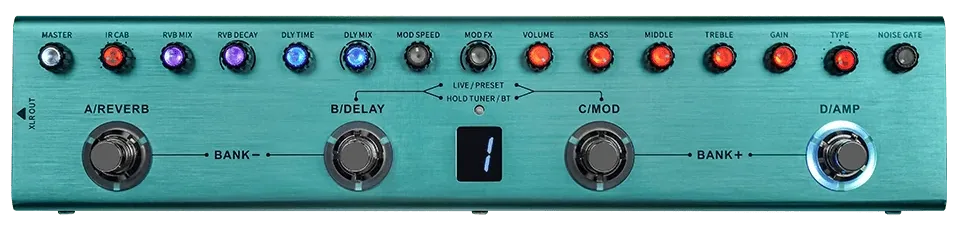
Python desktop app and command-line tool that edit and store Tank-G presets over USB-MIDI SysEx, with an optional Gemini-based generator that turns a text description of a tone into amp, EQ and effect settings.
- Distribution
- Build from source yourself
- Source
- github.com https://github.com/AlexandreTonin/tank-g-controller
- editor
- midi
- usb-midi
- presets
- ai
- python
- cli
- research
Description
Written from Wireshark captures of the M-EFCS editor's USB traffic, which the README says it decoded command by command. The PySide6 window has panels for gate and cab, amp, modulation, delay and reverb, knobs that follow the pedal, footswitch indicators for module bypass and a grid of the 36 presets from 1A to 9D. It switches presets, bypasses modules and writes the current settings into a preset slot in the pedal's memory, and the command-line mode covers the same controls. The tone generator sends the description to Google's Gemini with the user's own API key and clamps every returned value to the range the pedal accepts before sending it. The repository includes the capture files, a parameter guide and a reverse engineering log, all in Portuguese like the README. It has 25 offline tests.
Install notes
pip install -r requirements.txt on Python 3.10 or newer, then python main.py for the window or python tankg.py with arguments for the command line. The Gemini panel needs a GEMINI_API_KEY. On Windows close M-EFCS and any DAW first, since only one program can open the pedal's MIDI port.
Version history
| Version | Date | Notes |
|---|---|---|
| main @ 12600ac | 2026-10-29 | No tagged releases; this is the latest commit. |